
Evidence-first efficacy analysis
Does ProDentim Really Work? What the Clinical Evidence Actually Shows
We separate evidence for the finished ProDentim product from evidence for individual probiotic strains, then answer the gum, cavity, breath, sensitivity and whitening questions one by one.
We cannot say that ProDentim itself is clinically proven to work. The broader oral-probiotic field has real human evidence, including a 2026 umbrella review that found modest benefits for certain probiotic strains on cariogenic bacteria, halitosis measures, and some caries-related outcomes. But that same review emphasized major strain, dose, delivery, and endpoint differences and called routine oral-disease prevention with probiotics experimental. We did not locate an independently verified randomized clinical trial of the finished ProDentim formula, so evidence for other probiotic strains cannot be treated as direct proof of this product.
Affiliate disclosure: HowToY Health is an independent affiliate publisher. Product and checkout links may use our disclosed affiliate URL, and we may earn a commission from qualifying purchases at no additional cost to the buyer.
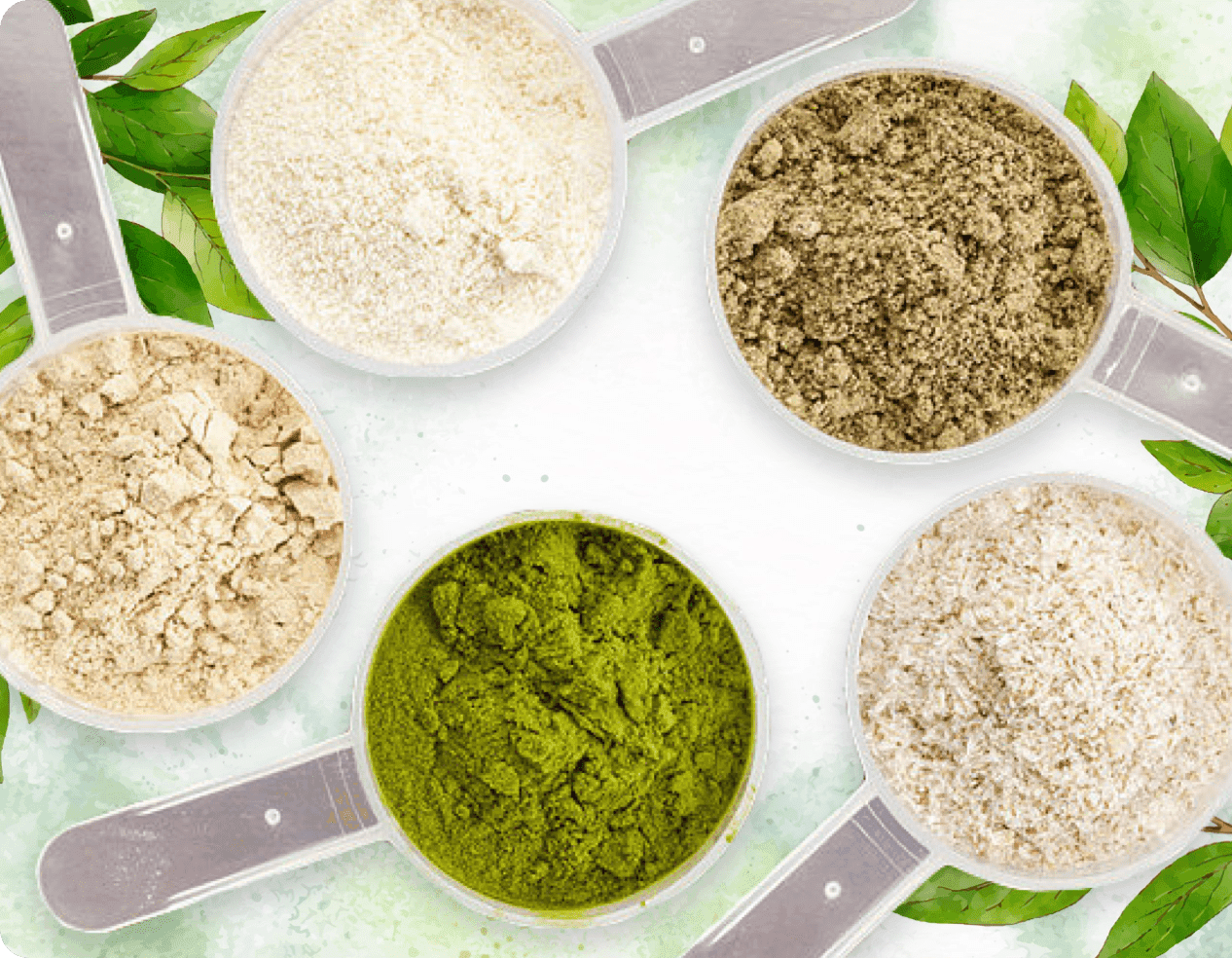
Seller-supplied formula imagery. Ingredient marketing is not finished-product clinical proof.
Evidence hierarchy
How strong is the evidence at each level?
| Evidence level | Finding | Strength | What it means |
|---|---|---|---|
| Finished ProDentim formula | No independently verified randomized clinical trial located | Insufficient | This is the evidence level that would most directly answer whether ProDentim itself works. |
| Oral probiotics as a category | 2026 umbrella review of 11 meta-analyses found modest potential benefits but important heterogeneity and surrogate endpoints | Promising but limited | Supports biological plausibility for selected strains, not automatic transfer to ProDentim. |
| L. paracasei SD1 | Randomized human trials reported reductions in mutans streptococci and selected caries-related outcomes | Strain-specific human evidence | Relevant only if ProDentim's exact strain, dose and delivery are shown to match closely enough. |
| L. reuteri | 2024 systematic review found limited adjunctive periodontal benefit in selected formulations | Limited strain/formulation evidence | Supports selected L. reuteri interventions alongside periodontal therapy, not the finished ProDentim product. |
| B. lactis research | Human periodontal trials exist for HN019 and other strains | Indirect for ProDentim | The seller names BL-04, so HN019 or DN-173010 trials are not direct evidence for the marketed strain. |
| Customer reviews | Mixed positive and negative experiences across seller testimonials and public review platforms | Anecdotal | Useful for experience and complaint signals, not for proving efficacy or causation. |
Quick outcome answers
What does the evidence say for specific dental goals?
Does ProDentim work for gum disease?
Not established for the finished product. Some probiotics have shown adjunctive periodontal benefits, but they were studied alongside conventional periodontal treatment and often used different strains.
Does ProDentim prevent cavities?
Not established. Selected probiotic strains may reduce cariogenic bacteria or modestly influence caries-related outcomes, but product-level prevention has not been demonstrated for ProDentim.
Does ProDentim help bad breath?
Possible in the probiotic category, unproven for ProDentim. A 2026 umbrella review found improvements in halitosis measures for some probiotic interventions, but the strains and formulations varied.
Does ProDentim help tooth sensitivity?
No reliable finished-product clinical evidence located. Sensitivity can have several causes that require dental evaluation.
Does ProDentim whiten teeth?
The seller makes whitening-related ingredient claims, but we did not locate a controlled ProDentim trial demonstrating clinically meaningful whitening.
Does ProDentim replace brushing or dental care?
No. Even favorable probiotic studies generally evaluate probiotics as adjuncts, not replacements for evidence-based oral hygiene or dental treatment.
In this evidence review
From probiotic research to the ProDentim verdict
Direct answer
Does ProDentim really work?
The evidence supports a more nuanced answer than either 'yes, definitely' or 'no, it is useless.' Oral probiotics are a legitimate research category, and some strains have produced measurable benefits in human trials. That makes the basic concept plausible.
The gap is the finished product. A commercial supplement does not inherit every positive result ever published for Lactobacillus or Bifidobacterium. To prove ProDentim itself, we would want a trial of the actual marketed formula, with the same strains, viable counts, delivery format, duration, and clinically meaningful outcomes.
We did not locate an independently verified randomized clinical trial of the finished ProDentim formula in our research pass. Without that, the strongest defensible conclusion is that ProDentim may be biologically plausible but remains clinically unproven as a complete product.
Highest-level current evidence
What the 2026 umbrella review says about oral probiotics
A March 2026 umbrella review in Frontiers in Oral Health synthesized eleven meta-analyses of clinical trials involving oral-health probiotic interventions. Participants ranged from infancy to adulthood, doses varied widely, and interventions lasted from seven days to twenty-four months.
The review found that probiotics were associated with reductions in Streptococcus mutans counts in most reported comparisons and improvements in halitosis measures in the majority of comparisons. It also reported modest pooled improvements in some caries-related outcomes.
Those findings strengthen the case that selected oral probiotics can influence measurable oral-health endpoints. But the review also found substantial heterogeneity in strains, doses, delivery methods, populations, and outcomes. Many endpoints were surrogate markers rather than hard long-term clinical outcomes such as new cavitated lesions, periodontal attachment loss, or tooth loss.
Most included meta-analyses were rated only moderate in methodological quality. The authors concluded that strain-specific, standardized randomized trials are still needed and that routine use of probiotics for oral-disease prevention should remain cautious or experimental.
That conclusion fits the ProDentim question almost perfectly: the category has promise, but a category-level signal is not a finished-product proof.
- 11 meta-analyses included.
- Common probiotic groups included Lactobacillus, Bifidobacterium and S. salivarius.
- Modest benefits were reported for some bacterial, halitosis and caries-related outcomes.
- Heterogeneity and surrogate outcomes limited certainty.
- Strain-specific, clinically meaningful RCTs remain necessary.
L. paracasei evidence
What studies on Lactobacillus paracasei actually show
The strongest L. paracasei oral-health evidence we located is specifically for the SD1 strain. In a randomized placebo-controlled trial involving 40 healthy young adults, L. paracasei SD1 delivered in milk powder for four weeks significantly reduced salivary mutans streptococci compared with baseline.
A longer randomized study in 122 children also used SD1 in milk powder for six months. It reported reduced mutans streptococci and fewer new caries lesions in a high-caries-risk subgroup.
A separate preschool trial likewise evaluated L. paracasei SD1 and reported favorable changes in mutans streptococci and caries development.
These findings are useful because they show that oral-probiotic effects can be strain-specific and measurable. But they do not establish that ProDentim contains SD1. The current seller presentation says Lactobacillus paracasei, while our direct label verification of the exact strain and individual viable count remains incomplete.
So these trials increase plausibility for a particular L. paracasei strain. They should not be rewritten as 'clinical trials prove ProDentim works.'
L. reuteri evidence
Does Lactobacillus reuteri make the case stronger?
Lactobacillus reuteri is another oral-probiotic species with human periodontal research. A 2024 systematic review included eleven studies and 369 subjects with chronic periodontitis.
Several trials reported improvements in pocket depth or clinical attachment when selected L. reuteri formulations were used as adjuncts to scaling and root planing. However, the review described the evidence as limited and identified high risk of bias in four studies and some concerns in the remaining seven.
The word 'adjunct' matters. These studies did not establish probiotics as a replacement for periodontal therapy. They tested them alongside conventional treatment.
The ProDentim seller names L. reuteri but does not, in the marketing text we reviewed, establish that its strain, dose, delivery, and periodontal protocol are equivalent to those used in the clinical literature.
B. lactis evidence
Why B. lactis BL-04 is a good example of evidence overreach
The seller specifically names B. lactis BL-04. That specificity lets us check whether the human oral-health evidence actually matches the marketed strain.
A randomized trial in chronic periodontitis found additional benefits when B. lactis HN019 lozenges were used alongside scaling and root planing. A 2024 gingivitis trial also evaluated HN019 and reported lower bleeding-on-marginal-probing after therapy in the probiotic group.
Those are legitimate human trials — but they are HN019 trials, not BL-04 trials. Another randomized periodontal study used DN-173010, which is again a different strain.
This is exactly why a review cannot cite 'Bifidobacterium lactis research' and then present it as direct evidence for any B. lactis-containing supplement. Probiotic efficacy is not guaranteed to transfer across strains.
The missing study
What evidence would directly show that ProDentim works?
The most useful study would enroll participants with a clearly defined oral-health condition or prevention target and randomize them to the actual marketed ProDentim formula or a matching placebo.
The researchers would document the exact Supplement Facts panel, strain designations, viable counts through the end of shelf life, delivery format, adherence, duration, concomitant oral care, and adverse events.
The trial would pre-register outcomes and prioritize clinically meaningful endpoints. Depending on the claim, that could include bleeding on probing, pocket depth, attachment level, new caries lesions, validated halitosis measures, or another predefined dental outcome.
A properly powered trial with transparent funding, pre-registration, complete reporting, and independent replication would substantially change the confidence level. We did not locate such a ProDentim-specific evidence package.
- Actual marketed formula, not a different probiotic.
- Verified exact strains and viable doses.
- Randomized placebo or standard-care comparison.
- Pre-registered clinically meaningful outcomes.
- Adequate follow-up.
- Transparent adverse-event reporting.
- Ideally independent replication.
Claims versus evidence
Which ProDentim marketing claims go beyond what the evidence can prove?
The seller's marketing extends beyond a narrow oral-probiotic claim. It connects the product with teeth, gums, breath, sinus comfort, respiratory support, immunity, digestion, sleep, allergies, and broader wellness.
The evidence reviewed here does not establish that the finished ProDentim formula produces that entire range of outcomes.
Even when an ingredient has a plausible mechanism, clinical claims require clinical evidence. Inulin being a prebiotic fiber does not prove the finished tablet changes gum disease. Tricalcium phosphate containing calcium and phosphate does not prove that the supplement repairs enamel. Peppermint producing freshness does not prove that it treats the cause of halitosis.
The right approach is claim-specific. Ask what exact outcome is promised, what exact ingredient or strain is supposed to produce it, and whether a sufficiently matched human study exists.
Outcome-by-outcome answer
Does ProDentim work for gums, cavities, breath, sensitivity or whitening?
Different dental problems require different evidence. A supplement cannot be called effective for 'oral health' as though all outcomes were interchangeable.
For gum disease, selected probiotic strains may offer adjunctive benefits, but product-level ProDentim efficacy is not established. For cavities, the 2026 umbrella evidence suggests some probiotics may modestly affect cariogenic bacteria or caries-related outcomes, but the findings are heterogeneous and not specific to ProDentim.
For bad breath, some probiotic interventions have improved halitosis measures, yet the exact strains and formulations vary. For sensitivity and whitening, we did not locate controlled ProDentim trials demonstrating clinically meaningful benefits.
If the problem is active disease — persistent bleeding, pain, swelling, cavities, loose teeth, infection, or significant sensitivity — treatment decisions should not be based on an affiliate supplement claim.
Customer experience
Do ProDentim reviews show that it works in real life?
Reviews show that experiences vary. The seller publishes strongly positive testimonials, while Trustpilot currently shows a heavily negative public profile. Some customers report perceived improvements; others report no benefit, refund frustration, or adverse symptoms.
Neither source can establish efficacy. Seller testimonials are selected marketing material. Public review platforms are self-selected and do not provide a randomized comparison or a verified denominator of all buyers.
The useful role of reviews is practical: identify possible expectation, tolerability, refund, or support issues. They should not replace controlled evidence when answering whether a health product works.
Commercial decision
Is ProDentim worth trying if the evidence is uncertain?
That becomes a personal risk-and-value decision rather than a scientific yes/no answer. The product is sold under a current offer with a written 60-day return policy, which reduces some financial risk but does not eliminate it.
The refund requires returning all purchased bottles, including opened or empty bottles, and the customer pays return shipping. Larger bundles reduce the advertised price per bottle but require more money upfront.
An informed buyer should therefore ask whether experimenting with an unproven finished product is worth the cost while keeping normal dental care unchanged. The answer can differ by budget, expectations, health status, and the problem being targeted.
Do not buy a larger bundle simply because the price per bottle is lower if you are not comfortable with the evidence uncertainty and refund process.
Evidence verdict
Does ProDentim really work? Our final answer
The oral-probiotic concept has moved beyond pure speculation. The 2026 evidence synthesis and multiple strain-specific randomized trials show that selected probiotics can influence oral bacteria, halitosis measures, and some periodontal or caries-related outcomes.
But ProDentim itself remains a separate evidentiary question. We did not locate an independently verified randomized trial of the marketed finished formula, and some of the research most often used to support the product involves strains that are not proven to match the product.
That means the fairest answer is: ProDentim might work for some people or some outcomes, but current evidence does not let us reliably predict that it will, nor does it justify calling the finished product clinically proven.
If someone chooses to try it, it should be treated as an optional supplement experiment — not as a replacement for fluoride toothpaste, interdental cleaning, dental diagnosis, periodontal therapy, restorations, or other evidence-based care.
Related ProDentim research
Separate efficacy from reviews, ingredients and buying details
Pages still under editorial research remain noindex until their full content review is complete.
Evidence sources
Clinical and seller sources used for this analysis
Frontiers in Oral Health / PubMed
The effects of probiotics intervention on oral health outcomes: a comprehensive umbrella review of meta-analyses
2026 high-level evidence synthesis of 11 meta-analyses; supports modest category-level benefits while emphasizing heterogeneity, surrogate outcomes and the need for strain-specific RCTs.
Open source →BMC Oral Health / PubMed
Clinical effects of probiotics on the treatment of gingivitis and periodontitis: a systematic review and meta-analysis
2025 meta-analysis of randomized probiotic studies in gingivitis and periodontitis; useful for adjunctive periodontal evidence context.
Open source →PubMed
Lactobacillus paracasei SD1, a novel probiotic, reduces mutans streptococci in human volunteers
Randomized placebo-controlled human evidence for the specific SD1 strain.
Open source →PubMed
Effect of Long-Term Consumption of Lactobacillus paracasei SD1 on Reducing Mutans streptococci and Caries Risk
Longer randomized SD1 study in children demonstrating strain-specific oral-health research.
Open source →PubMed
Reducing mutans streptococci and caries development by Lactobacillus paracasei SD1 in preschool children
Additional randomized SD1 trial reinforcing that the strongest L. paracasei evidence is tied to a specific strain.
Open source →PubMed
Clinical effects of Lactobacillus reuteri probiotic in chronic periodontitis — a systematic review
2024 systematic review of selected L. reuteri formulations as adjuncts to periodontal treatment.
Open source →PubMed
Effects of Bifidobacterium probiotic on the treatment of chronic periodontitis: A randomized clinical trial
Human trial of B. lactis HN019 illustrating why evidence for HN019 should not be transferred directly to BL-04.
Open source →PubMed
Microbiological profile of patients with generalized gingivitis undergoing periodontal therapy and administration of Bifidobacterium animalis subsp. lactis HN019
2024 randomized HN019 gingivitis trial; relevant category evidence but a different strain from the BL-04 named by the ProDentim seller.
Open source →ProDentim
ProDentim Text Presentation
Seller-controlled source for current marketed formula and health claims evaluated against the independent evidence.
Open source →FAQ
Does ProDentim really work? FAQ
Does ProDentim really work?
The broader oral-probiotic category has promising human evidence, but HowToY Health did not locate an independently verified randomized trial of the finished ProDentim formula. So the product itself is not established as clinically proven.
Are ProDentim ingredients clinically proven?
Some specific probiotic strains have human clinical research. That does not mean every strain, dose, or combination in ProDentim has been clinically proven to produce the seller's claimed outcomes.
Does ProDentim work for gum disease?
Selected probiotic strains may provide adjunctive periodontal benefits alongside conventional therapy, but finished-product ProDentim efficacy for gum disease has not been established.
Can ProDentim prevent cavities?
Some oral-probiotic evidence suggests modest effects on cariogenic bacteria and caries-related outcomes, but ProDentim itself has not been shown in a verified randomized trial to prevent cavities.
Can ProDentim help bad breath?
Some probiotic interventions have improved halitosis measures in research, but those findings are not sufficient to prove that the ProDentim formula will reliably improve bad breath.
Why do ingredient studies not prove ProDentim works?
Probiotic effects can depend on the exact strain, dose, formulation, delivery method, population, duration and endpoint. A positive study on one strain cannot automatically be transferred to a different commercial formula.
Should ProDentim replace dental treatment?
No. A dietary supplement should not replace fluoride toothpaste, cleaning between teeth, professional examinations, periodontal therapy, restorations or treatment for infection and other dental disease.
Last editorial update:
Evidence does not replace diagnosis
Persistent bleeding, pain, swelling, loose teeth, cavities, infection, oral lesions or unexplained sensitivity may require professional dental assessment regardless of supplement use.
Still considering ProDentim?
Verify the current product, price, quantity, shipping and refund terms before paying.