
Formula and search-source investigation
ProDentim Ingredients and Colibrim: What Is Actually in the Formula?
Searching for ProDentim ingredients Colibrimcan make it look as though Colibrim belongs in the formula. It doesn't. We separate the third-party website from the ingredients the seller actually names and then check what the strain-level evidence really supports.
Colibrim is not listed by the ProDentim seller as an ingredient. Colibrim is a separate supplement website that publishes a ProDentim promotional page. The current ProDentim seller presentation instead names Lactobacillus paracasei, B. lactis BL-04, Lactobacillus reuteri, inulin, malic acid, tricalcium phosphate, and peppermint.
Affiliate disclosure: HowToY Health is an independent affiliate publisher. Product and checkout links may use our disclosed affiliate URL, and we may earn a commission from qualifying purchases at no additional cost to the buyer.
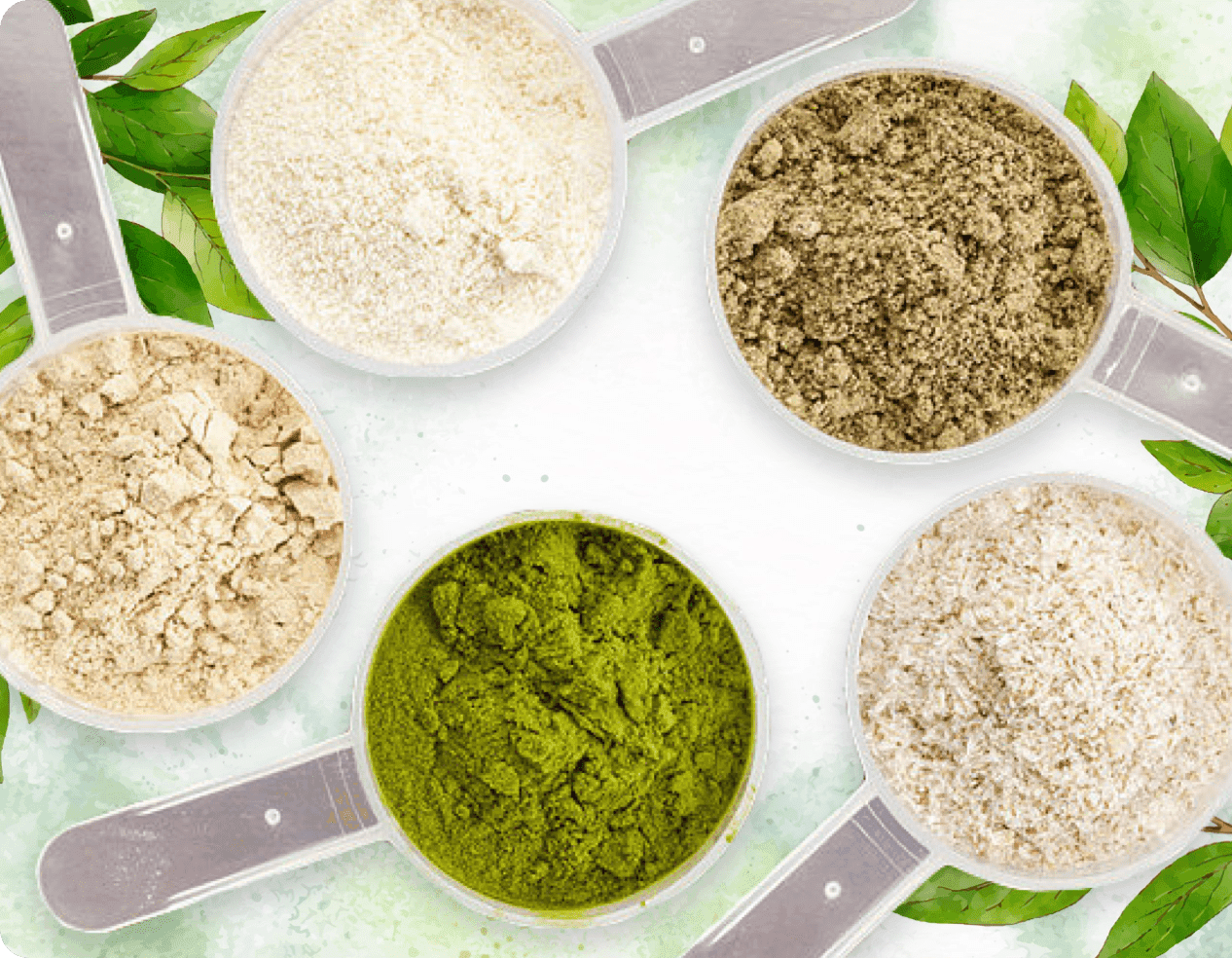
Seller-supplied ingredient imagery. It identifies marketed components but is not independent clinical evidence.
Formula snapshot
ProDentim ingredients: seller claim versus evidence
| Ingredient | Seller position | HowToY evidence view |
|---|---|---|
| Lactobacillus paracasei | Named probiotic component | Human oral-health evidence exists for specific L. paracasei strains such as SD1, but the seller does not establish that ProDentim contains SD1. |
| B. lactis BL-04 | Named probiotic component | The seller names BL-04, while the periodontal trials we verified involved other B. lactis strains such as HN019 or DN-173010. |
| Lactobacillus reuteri | Named probiotic component | A 2024 systematic review found limited adjunctive periodontal evidence for selected L. reuteri preparations, not for ProDentim itself. |
| Inulin | Part of the proprietary plant/mineral blend | A familiar prebiotic fiber, but its current ProDentim dose and specific oral-health contribution have not been independently established. |
| Malic acid | Promoted for maintaining tooth whiteness | The seller's whitening claim is not equivalent to finished-product clinical evidence. |
| Tricalcium phosphate | Promoted for tooth support | Contains calcium and phosphate, but inclusion does not prove enamel remineralization or treatment of decay from this supplement. |
| Peppermint | Promoted for freshness / inflammatory support | May influence flavor and perceived freshness; that is not evidence of disease treatment. |
In this guide
ProDentim ingredients and Colibrim questions
Search-intent clarification
Is Colibrim one of the ProDentim ingredients?
No. In the seller-controlled ProDentim formula presentation reviewed by HowToY Health, Colibrim does not appear as a probiotic strain, mineral, plant ingredient, excipient, or proprietary blend component.
Colibrim appears in this search phrase because prodentim.colibrim.com is a separate website publishing a ProDentim page. That page describes the product, repeats ingredient and benefit claims, displays pricing-style content, and promotes purchasing. In other words, 'Colibrim' is a website/domain association in search results, not an ingredient name in the formula.
This distinction matters because search engines can combine product names with websites that rank for them. A phrase such as 'ProDentim ingredients Colibrim' can therefore look like a formula query even when one term actually refers to the publisher of a third-party page.
- Colibrim is not listed in the seller's ingredient section.
- prodentim.colibrim.com is a separate ProDentim promotional page.
- A third-party page is not automatically the product manufacturer or official seller.
- Ingredient facts should be checked against seller-controlled label information and independent scientific sources.
Current seller formula
What ingredients does the ProDentim seller actually name?
The current ProDentim text presentation says the product contains a total of 3.5 billion probiotics and names three probiotic components: Lactobacillus paracasei, B. lactis BL-04, and Lactobacillus reuteri.
The same page describes a proprietary blend of four plants and minerals: inulin, malic acid, tricalcium phosphate, and peppermint. The seller associates these components with beneficial bacteria, tooth whiteness, tooth health, freshness, or inflammatory support.
Those are seller descriptions, not independent proof that the finished tablet produces each promoted outcome. A useful formula audit separates three questions: is the ingredient actually present, is the dose and strain clearly verified, and does relevant human evidence support the claimed outcome?
The seller also hosts a references page with a ProDentim label image. Direct verification of the current full Supplement Facts panel remains important because a marketing ingredient section may not provide every quantity, inactive ingredient, allergen, storage condition, or strain-level detail needed for a clinical comparison.
Probiotic evidence
Lactobacillus paracasei: promising strain research, but strain identity matters
Lactobacillus paracasei is not one single intervention. Different strains can behave differently. The strongest oral-health research we located involved L. paracasei SD1 rather than a generic species label.
A randomized placebo-controlled trial in 40 healthy young adults tested L. paracasei SD1 delivered in milk powder once daily for four weeks. The study reported a significant reduction in salivary mutans streptococci in the probiotic group and detected the SD1 strain after supplementation stopped.
A longer randomized study in 122 children also used L. paracasei SD1 in milk powder. It reported lower mutans streptococci and fewer new caries lesions in a high-caries-risk subgroup.
These studies support the idea that some L. paracasei strains may influence oral microbial or caries-related outcomes. They do not establish that ProDentim contains SD1, uses the same dose, achieves the same viability, or produces the same clinical result.
Strain mismatch
B. lactis BL-04: why studies on other Bifidobacterium strains do not prove its effect
ProDentim seller material specifically names B. lactis BL-04. That specificity is useful, because probiotic evidence should ideally match the actual strain. The problem is that the oral-health trials we verified were not BL-04 trials.
A 2018 randomized clinical trial used B. animalis subsp. lactis HN019 lozenges as an adjunct to scaling and root planing in people with chronic periodontitis. The probiotic group showed additional improvements in selected periodontal, microbiological, and inflammatory outcomes.
A separate 2023 randomized study tested B. animalis subsp. lactis DN-173010 in yogurt alongside non-surgical periodontal treatment. Some plaque, gingival, and bleeding measures favored the probiotic group, while probing-depth and clinical-attachment changes did not significantly differ between groups.
These trials demonstrate that certain B. lactis strains have been studied in periodontal contexts. They do not show that BL-04 has the same oral effects, and they do not test the finished ProDentim tablet.
Systematic-review evidence
Lactobacillus reuteri: limited evidence as an adjunct to periodontal treatment
Lactobacillus reuteri has a larger oral-health literature than many probiotic species. A 2024 systematic review evaluated eleven studies involving 369 subjects with chronic periodontitis.
The review found that some L. reuteri preparations used alongside scaling and root planing improved selected periodontal measures. However, it described the available evidence as limited and reported high risk of bias in four studies with concerns in the remaining seven.
This supports cautious interest in certain L. reuteri formulations as adjuncts to conventional periodontal care. It does not establish that an unspecified L. reuteri strain in ProDentim can treat periodontitis, and it certainly does not justify replacing scaling, root planing, routine oral hygiene, or dental assessment.
Non-probiotic ingredients
What about inulin, malic acid, tricalcium phosphate and peppermint?
The supporting ingredients are easier to understand mechanistically than they are to translate into finished-product outcomes. Inulin is commonly used as a prebiotic fiber, so it is biologically plausible that it can support some beneficial microorganisms. But the current ProDentim amount and its specific effect inside the mouth have not been independently established.
The seller links malic acid with tooth whiteness. That should be treated as a marketing claim unless the finished formulation has relevant clinical evidence. Acidic compounds can interact with enamel differently depending on concentration, formulation, exposure time, buffering, and saliva.
Tricalcium phosphate is a calcium/phosphate compound. Calcium and phosphate are relevant to tooth mineral chemistry, but the presence of tricalcium phosphate in a chewable supplement does not by itself prove remineralization, cavity prevention, or enamel repair.
Peppermint can contribute flavor and a fresh sensation. Freshness may improve the user experience, but it is not a clinical marker showing that gingivitis, periodontitis, decay, infection, or another dental condition has improved.
- Inulin: plausible prebiotic role, product-specific oral benefit not established.
- Malic acid: seller whitening association requires formulation-specific evidence.
- Tricalcium phosphate: mineral relevance does not equal proven enamel repair.
- Peppermint: freshness and flavor are not disease outcomes.
Label verification
What is still missing from a complete ProDentim ingredient audit?
A professional ingredient review needs more than a sales-page list. The key unresolved item is direct verification of the full current Supplement Facts panel in a form that clearly records serving size, individual probiotic quantities or allocation, strain designations, other ingredients, allergen statements, storage directions, and any proprietary-blend quantities.
The seller's references page visibly includes a ProDentim label section, but the existence of a label image is not the same as having every value transcribed and checked against the current sales presentation.
Until those details are fully verified, HowToY Health will avoid claiming exact per-strain CFU amounts or applying a clinical study to the product simply because a species name appears in both places.
Third-party page audit
How should you read ProDentim claims on Colibrim?
The Colibrim page describes ProDentim ingredients and repeats benefit-oriented language involving gums, oral bacteria, breath, sensitivity, and tooth health. Because it is a separate promotional website, those statements should be checked against the seller-controlled formula and independent research rather than accepted because the page ranks in search.
One practical red flag is when a third-party page turns a general ingredient property into a finished-product promise. For probiotics, that shortcut is especially weak because strain identity and dose matter. For minerals or plant ingredients, formulation and exposure also matter.
Colibrim can therefore be useful as a source for understanding what searchers are seeing, but it is not our primary authority for what is in ProDentim or whether the product works.
Ingredient safety
Are the ProDentim ingredients safe for everyone?
The seller says the product is designed for all ages and medical conditions, but that is broader than we can independently establish. Probiotics are commonly consumed by healthy people, yet risk can differ for people who are severely ill or significantly immunocompromised.
Inulin may cause gas, bloating, or digestive discomfort. Peppermint may aggravate reflux or irritate sensitive users. The implications of malic acid depend on the finished formulation and oral exposure. Exact inactive ingredients and allergens should be checked on the current label.
People who are pregnant, breastfeeding, immunocompromised, seriously ill, taking medication, or preparing for a procedure should seek appropriate professional guidance before using a supplement.
And no ingredient list makes ProDentim a substitute for dental care. Persistent bleeding, pain, swelling, loose teeth, cavities, infection, or oral lesions may need professional assessment.
Ingredient verdict
ProDentim ingredients and Colibrim: the practical conclusion
The first conclusion is simple: Colibrim is not a ProDentim ingredient. It is a separate website publishing ProDentim promotional content.
The actual marketed formula is more interesting. Several named probiotic species belong to an oral-health research category with human data. The limitation is that the best evidence is strain-specific, while ProDentim's finished-product efficacy has not been independently established.
The B. lactis example shows why this matters: the seller names BL-04, but the periodontal trials we verified used HN019 or DN-173010. Likewise, positive L. paracasei SD1 research cannot be assigned to a generic L. paracasei listing without establishing the strain match.
So the ingredient list gives ProDentim biological plausibility, not a clinical guarantee. A buyer should verify the current label, treat seller and Colibrim benefit statements as marketing until independently supported, and keep normal evidence-based dental care in place.
Related ProDentim research
Continue from the formula to the buying decision
Pages still under editorial research remain noindex until their full content review is complete.
Sources
Sources used to verify ProDentim ingredients and Colibrim
ProDentim
ProDentim Text Presentation
Seller-controlled source for the currently marketed probiotic components, supporting ingredients, advertised probiotic total, and benefit claims.
Open source →ProDentim
ProDentim Scientific References and Label Page
Seller reference list and the publicly displayed ProDentim label section.
Open source →Colibrim
ProDentim oral probiotics — Colibrim
Third-party promotional page establishing why Colibrim appears in ProDentim ingredient-related searches.
Open source →PubMed
Lactobacillus paracasei SD1, a novel probiotic, reduces mutans streptococci in human volunteers
Randomized placebo-controlled human evidence for the specific L. paracasei SD1 strain.
Open source →PubMed
Effect of Long-Term Consumption of Lactobacillus paracasei SD1 on Reducing Mutans streptococci and Caries Risk
Longer randomized SD1 study illustrating strain-specific oral-health evidence.
Open source →PubMed
Clinical effects of Lactobacillus reuteri probiotic in chronic periodontitis — a systematic review
Systematic review of selected L. reuteri formulations used alongside periodontal treatment.
Open source →PubMed
Effects of Bifidobacterium probiotic on the treatment of chronic periodontitis: A randomized clinical trial
Randomized human periodontal trial of B. lactis HN019, demonstrating why evidence for HN019 should not be assigned directly to BL-04.
Open source →PubMed
Bifidobacterium animalis subsp. lactis as adjunct to non-surgical periodontal treatment in periodontitis
Randomized trial of B. lactis DN-173010, another strain distinct from ProDentim's marketed BL-04.
Open source →FAQ
ProDentim ingredients FAQ
Is Colibrim an ingredient in ProDentim?
No. Colibrim is not listed in the seller-controlled ProDentim ingredient presentation. Colibrim is a separate website that publishes a ProDentim promotional page.
What are the main ProDentim ingredients?
Current seller material names Lactobacillus paracasei, B. lactis BL-04, Lactobacillus reuteri, inulin, malic acid, tricalcium phosphate, and peppermint, while advertising a total of 3.5 billion probiotic organisms.
Is Lactobacillus paracasei in ProDentim clinically proven?
Human oral-health trials exist for specific strains such as L. paracasei SD1. The seller does not establish in the reviewed marketing text that ProDentim contains SD1, so those trials cannot be treated as direct product proof.
Is B. lactis BL-04 proven for gum health?
The seller names BL-04, but the periodontal randomized trials verified by HowToY Health involved other B. lactis strains such as HN019 and DN-173010. Those studies cannot directly prove BL-04 has the same effect.
What does the evidence say about Lactobacillus reuteri?
A 2024 systematic review found limited evidence that selected L. reuteri formulations may add benefit when used alongside scaling and root planing in periodontitis. That does not establish the effectiveness of ProDentim.
Does tricalcium phosphate mean ProDentim repairs enamel?
No. Calcium and phosphate are relevant to tooth mineral chemistry, but merely including tricalcium phosphate in a supplement does not prove that the finished product remineralizes or repairs enamel.
Can ProDentim ingredients replace brushing or a dentist?
No. A dietary supplement should not replace fluoride toothpaste, interdental cleaning, professional examination, periodontal treatment, fillings, or care for pain, infection, bleeding, swelling, or loose teeth.
Last editorial update:
Ingredient evidence is not dental treatment
Research on probiotics or minerals does not mean ProDentim can diagnose, treat or cure dental disease. Persistent bleeding, pain, swelling, loose teeth, cavities or infection may require professional dental assessment.
Check the current formula before buying
Verify the live product presentation, final checkout and any current label details rather than relying on an old third-party ingredients page.
Check the current ProDentim offer →