
Finished-product efficacy analysis
Does AudiFort Work? An Evidence-Based Assessment
We separate AudiFort's seller claims, real scientific references, ingredient plausibility and testimonials from the stronger question: has the complete marketed formula been shown to improve hearing or tinnitus in humans?
Affiliate disclosure: HowToY Health is an independent affiliate publisher. Product and checkout links may use our disclosed affiliate URL, and we may earn a commission from qualifying purchases at no additional cost to the buyer.
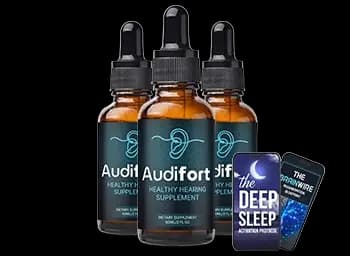
A real product and real background science do not automatically equal finished-product clinical proof.
Answer first
Does AudiFort really work?
AudiFort is a real liquid dietary supplement with a published ingredient label and a seller-curated scientific reference list, but HowToY Health did not locate an independently verified randomized human trial of the complete AudiFort formula showing that it restores hearing, repairs auditory nerves or treats tinnitus. The seller's evidence is mainly ingredient, mechanism, animal and general hearing/tinnitus research rather than finished-product clinical evidence. That means AudiFort may contain biologically interesting ingredients, but the stronger claim that the marketed formula reliably improves hearing outcomes remains unproven.
Evidence scorecard
How strong is the AudiFort evidence?
Finished-product randomized trial
Not located
Exact searches did not surface a randomized human study of the complete AudiFort formula.
Human AudiFort efficacy data
Not located
We did not find a peer-reviewed human trial measuring hearing or tinnitus outcomes for AudiFort itself.
Ingredient and mechanism research
Present
The seller publishes scientific references related to tinnitus, cochlear biology, phytochemicals and other mechanisms.
Dose transparency
Limited
More than 20 ingredients share a 200 mg proprietary blend, so most individual doses cannot be compared directly with studies.
Tinnitus supplement evidence
Not established
NIDCD states that supplements commonly advertised as tinnitus cures have not been proven effective.
Seller testimonials
Positive but uncontrolled
The seller displays strong testimonials and ratings, but these are not randomized evidence and cannot establish causation.
In this analysis
AudiFort effectiveness questions
Start with the right question
What would it mean for AudiFort to really work?
For a hearing-support supplement, 'works' can mean several very different things. A customer might mean less perceived ringing, clearer hearing, better concentration, more energy or simply feeling better after taking the product.
A clinical claim is stronger. To show that AudiFort reliably improves hearing or tinnitus, the marketed formula would ideally be tested in humans with predefined outcomes, an appropriate comparison group, adequate sample size and transparent reporting.
Without that finished-product evidence, personal experiences and ingredient research can suggest possibilities but cannot tell us how likely AudiFort is to produce a meaningful hearing outcome for a typical buyer.
What the seller claims
What results does AudiFort say users can expect?
The current AudiFort seller site describes the formula as hearing support and says users may notice less noise and better ear health after adapting to the ingredients.
The seller also says the formula uses research-backed ingredients and suggests that the best results in its testing came from consistent use for four months or longer.
Those statements are seller claims. The same site carries the standard dietary-supplement disclaimer stating that the product is not intended to diagnose, treat, cure or prevent disease.
HowToY Health did not locate a publicly available protocol, dataset or peer-reviewed paper for the seller's claimed four-month testing.
The strongest evidence test
Is there a clinical trial showing that AudiFort itself works?
In our current searches, we did not locate a randomized human trial of the complete marketed AudiFort formula in PubMed or ClinicalTrials.gov.
That matters because finished-product testing answers the exact buyer question: whether this combination, at this dose, used this way, improves a defined hearing or tinnitus outcome.
Ingredient studies cannot automatically be transferred to a proprietary blend. The formula may use different doses, different combinations and a different study population from the research cited for individual ingredients or mechanisms.
The evidence gap does not prove the product has zero effect. It means the magnitude, reliability and clinical relevance of any effect are not established by product-specific randomized evidence we could verify.
Audit of the scientific references
Are AudiFort's scientific references real?
Several references listed by the seller are real scientific or institutional sources. The key issue is what those sources actually test.
For example, the seller cites a 2006 Nature paper by White and colleagues showing that mammalian cochlear supporting cells can divide and trans-differentiate into hair cells under experimental conditions.
That is relevant to auditory biology, but the study does not test AudiFort, its proprietary blend or oral supplementation in consumers.
The seller also cites tinnitus mechanism research and an NIDCD item about reducing tinnitus-related activity in rats. Animal and mechanistic findings are valuable for research, but they do not establish that AudiFort produces the same result in humans.
Formula plausibility
Do AudiFort ingredients have evidence behind them?
AudiFort contains chromium and a proprietary blend with more than 20 botanicals, amino acids and other compounds. The label includes ingredients such as grape seed, green tea, guarana, gymnema, astragalus, Panax ginseng, GABA and several amino acids.
Some of these ingredients have research in areas such as antioxidant activity, metabolism, circulation, stress or general physiology. That can create biological plausibility for broad wellness claims.
Plausibility is not the same as demonstrated hearing efficacy. To move from 'this ingredient affects a biological pathway' to 'this product improves hearing,' evidence has to connect the complete formula to a meaningful outcome in people.
Dose transparency
Why the 200 mg proprietary blend limits the evidence comparison
The current label places more than 20 ingredients inside a 200 mg proprietary blend. Most individual ingredient amounts are not disclosed.
That makes it difficult to compare AudiFort with published ingredient studies because effective or studied doses cannot be matched ingredient by ingredient.
Even when an ingredient has promising research, the relevant question is whether AudiFort supplies a comparable amount and whether combining it with the other ingredients changes the expected effect.
Dose opacity is therefore one of the biggest limitations in translating ingredient research into confidence about the finished product.
- Serving size: 1 mL.
- 60 servings per bottle.
- More than 20 ingredients share 200 mg.
- Most individual blend doses are undisclosed.
- Direct dose comparison with research is therefore limited.
Tinnitus evidence
Does AudiFort work for tinnitus?
AudiFort is frequently searched in connection with tinnitus because the seller discusses less noise and cites tinnitus-related research.
NIDCD states that vitamins, herbal extracts and dietary supplements commonly advertised as tinnitus cures have not been proven effective.
A clinical practice guideline indexed in PubMed also recommends against dietary supplements for treating persistent bothersome tinnitus.
Those sources do not evaluate AudiFort by brand name, but they establish a high evidence bar for any supplement-based tinnitus claim. We did not locate product-specific AudiFort evidence that clears that bar.
Hearing restoration claims
Can AudiFort restore hearing or regenerate auditory structures?
The seller's marketing connects AudiFort with ear protection, cognitive support and nerve-related mechanisms, and its scientific references include work on cochlear hair-cell biology.
Research showing that cells can behave a certain way in laboratory or animal settings does not mean an oral supplement can regenerate damaged hearing structures in people.
We did not locate a human AudiFort trial demonstrating restored hearing thresholds, regenerated auditory nerves or reversal of sensorineural hearing loss.
AudiFort should therefore not be treated as a substitute for hearing evaluation, hearing aids or other evidence-based management when hearing loss is present.
Customer experience
Do AudiFort reviews show that it works?
The seller displays a 4.98/5 rating based on 2300+ reviews and selected customer testimonials. Positive reviews can show that some buyers report favorable experiences.
Reviews cannot determine causation. Hearing and tinnitus symptoms can fluctuate, customers can make other changes at the same time, and seller-hosted review systems do not provide the same controls as clinical research.
The seller's own terms also state that testimonials and examples can reflect exceptional outcomes and should not be taken as guarantees of typical results.
Use reviews to understand buyer experiences and expectations, not to calculate a clinical success rate.
Time-to-results claim
Does taking AudiFort for four months make it more likely to work?
AudiFort currently says most people start feeling a difference after the first week and that its best results came from consistent use for four months or longer.
We did not locate a peer-reviewed finished-product study validating a one-week onset or four-month optimum for AudiFort.
Longer use can increase cost substantially because the seller directions imply roughly one bottle per month. A buyer considering several months should weigh that cost against the uncertainty in the product-specific evidence.
What regulation tells us
Does being sold as a dietary supplement prove effectiveness?
No. FDA explains that dietary supplements are not approved for safety and effectiveness before they are marketed in the same way as new drugs.
Manufacturers are responsible for ensuring that supplement labeling is lawful and that claims are truthful and substantiated, while FDA oversight largely occurs under a different regulatory framework from premarket drug approval.
That means the fact that AudiFort is legally sold as a supplement should not be interpreted as government verification that it improves hearing.
Practical decision
Who might still consider trying AudiFort?
An adult who understands that AudiFort is not a proven hearing-loss or tinnitus treatment, has checked the ingredient list for medication and health-condition concerns, and can afford the purchase may still choose to try it as an optional dietary supplement.
The most reasonable expectation is exploratory rather than therapeutic: monitor how you feel without assuming the product will restore hearing or fix a diagnosed condition.
Someone with sudden hearing loss, persistent one-sided symptoms, pulsatile tinnitus or other concerning changes should prioritize appropriate assessment rather than delaying care for a supplement trial.
Final efficacy verdict
Does AudiFort really work? Our 2026 verdict
AudiFort has more substance behind it than a formula with no disclosed ingredients or scientific context. The seller provides a real label and cites legitimate research relevant to hearing biology and tinnitus.
The missing piece is the most important one: independently verified finished-product human evidence showing that the marketed AudiFort formula reliably produces the hearing outcomes implied by its promotion.
Our verdict is therefore mixed but clear. AudiFort is a real supplement with biologically plausible ingredients and real background science, but its complete formula is not clinically proven to restore hearing or treat tinnitus based on the evidence we could verify.
If you choose to try it, do so with realistic expectations, review medication and health considerations, and verify the live price and return terms before buying multiple bottles.
Related AudiFort research
Separate efficacy from reviews, buying and dosage
Sources
Sources used for this AudiFort efficacy analysis
AudiFort
AudiFort Official Website
Current seller claims, ingredient presentation, scientific references, FAQ and dietary-supplement disclaimer.
Open source →AudiFort
AudiFort Order Page
Current seller efficacy claims, testimonials, package information and scientific-reference list.
Open source →NIDCD
What Is Tinnitus? Causes and Treatment
Independent federal guidance stating that supplements advertised as tinnitus cures have not been proven effective.
Open source →PubMed
Clinical Practice Guideline: Tinnitus
Clinical guideline recommending against dietary supplements for treating persistent bothersome tinnitus.
Open source →PubMed
Mammalian Cochlear Supporting Cells Can Divide and Trans-differentiate into Hair Cells
Primary paper cited by AudiFort showing cochlear-cell biology, used to distinguish mechanistic research from product efficacy.
Open source →FDA
Information for Consumers on Using Dietary Supplements
Current FDA explanation that dietary supplements are not approved for safety and effectiveness before marketing.
Open source →FAQ
Does AudiFort work? Common questions
Does AudiFort work?
There is not enough verified finished-product evidence to say that AudiFort reliably improves hearing. We did not locate a randomized human trial of the complete formula.
Does AudiFort really work?
AudiFort contains researched ingredients and the seller cites legitimate hearing-related science, but ingredient and mechanism evidence do not prove that the marketed formula produces a reliable clinical benefit.
Has AudiFort been clinically tested?
The seller refers to its own testing, but HowToY Health did not locate a publicly available peer-reviewed randomized human trial of the complete AudiFort formula.
Does AudiFort work for tinnitus?
We did not find product-specific evidence showing that AudiFort treats tinnitus. NIDCD states that dietary supplements marketed as tinnitus cures have not been proven effective.
Can AudiFort restore hearing?
We did not locate a human AudiFort trial demonstrating restored hearing thresholds or reversal of sensorineural hearing loss.
Are AudiFort's scientific references fake?
No. Several cited sources are real scientific or institutional references. The limitation is that they generally study mechanisms, ingredients, tinnitus or auditory biology rather than AudiFort itself.
Why does the proprietary blend matter?
More than 20 ingredients share a 200 mg blend, so most individual doses are unknown and cannot be directly compared with doses used in research.
How long does AudiFort take to work?
The seller says some people notice changes after a week and recommends four months or longer, but we did not locate peer-reviewed product-specific evidence validating those timeframes.
Last editorial update:
Medical information notice
This page evaluates evidence and does not diagnose or treat hearing loss or tinnitus. Sudden or concerning hearing changes should not be delayed for a supplement trial.
If you decide to try AudiFort
Verify the current price, merchant, bottle count and refund terms before committing to several months of use.