
FDA status and supplement regulation
Is AudiFort FDA Approved?
A precise explanation of AudiFort's FDA status, what dietary-supplement regulation actually means, and why a structure/function claim is not the same as product approval.
Affiliate disclosure: HowToY Health is an independent affiliate publisher. Product and checkout links may use our disclosed affiliate URL, and we may earn a commission from qualifying purchases at no additional cost to the buyer.
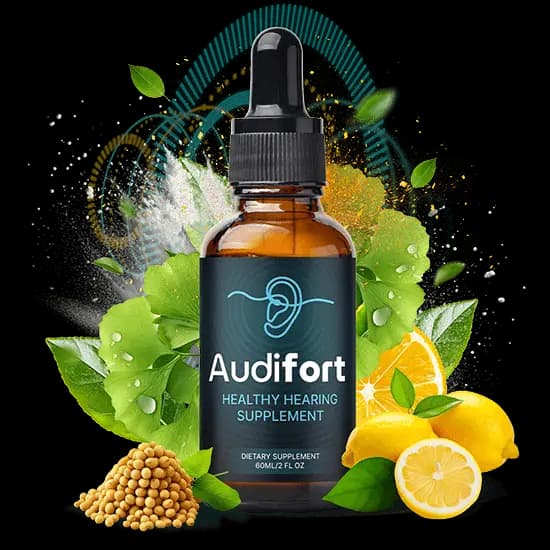
A Supplement Facts panel identifies a dietary supplement. It is not an FDA approval certificate.
Answer first
Is AudiFort FDA approved?
No — AudiFort should not be described as FDA approved. It is marketed as a dietary supplement, and FDA states that it does not approve dietary supplements for safety and effectiveness before they are sold to the public. AudiFort's own current website also states that its claims have not been evaluated by the Food and Drug Administration and that the product is not intended to diagnose, treat, cure or prevent disease. This does not mean FDA has no authority over supplements; it means the regulatory framework is different from the premarket approval process used for new drugs.
Regulatory snapshot
AudiFort FDA status at a glance
FDA-approved product?
No
AudiFort is marketed as a dietary supplement, a category FDA does not preapprove for safety and effectiveness before sale.
Seller says FDA approved?
No
The current AudiFort site displays a disclaimer that its statements have not been evaluated by FDA.
Can FDA regulate supplements?
Yes
FDA has postmarket authority and enforces supplement labeling, safety and manufacturing requirements under federal law.
Can supplements make disease-treatment claims?
Not as supplements
Claims to diagnose, mitigate, treat, cure or prevent disease can cause a product to be regulated as a drug.
Does a Supplement Facts label equal approval?
No
Required dietary-supplement labeling is not evidence of FDA premarket approval.
Does FDA approval answer whether AudiFort works?
No
AudiFort efficacy still depends on product-specific evidence; we did not locate a randomized human trial of the complete formula.
In this guide
FDA approval and AudiFort questions
Regulatory status
Is AudiFort FDA approved?
AudiFort is not an FDA-approved drug. It is sold as a dietary supplement, and FDA says it does not have authority to approve dietary supplements for safety and effectiveness before they are marketed.
That distinction is important because people often interpret the presence of a supplement on the US market as evidence that FDA reviewed and approved the finished product. That is not how the dietary-supplement system works.
AudiFort's own current site reinforces this point by stating that its claims have not been evaluated by FDA and that the product is not intended to diagnose, treat, cure or prevent disease.
How the category works
How does FDA regulate dietary supplements?
Dietary supplements are regulated under a different framework from new drugs. FDA explains that supplement companies are responsible for ensuring their products meet applicable safety and legal requirements before marketing.
FDA can inspect facilities, enforce labeling rules, take action against adulterated or misbranded products, issue warning letters and participate in recalls or other enforcement when legal standards are not met.
So 'not FDA approved' does not mean 'unregulated.' It means there is no routine premarket FDA approval decision establishing the supplement's safety and effectiveness before sale.
What claims can supplements make?
What are structure/function claims such as 'supports hearing'?
FDA allows dietary supplements to make certain structure/function claims when legal requirements are met. These claims describe how a nutrient or dietary ingredient may affect the normal structure or function of the body.
FDA does not generally preapprove those structure/function claims. Companies making covered claims must have substantiation that the statement is truthful and not misleading and must notify FDA within the required timeframe after first marketing the supplement with the claim.
The existence of a structure/function claim therefore does not mean FDA reviewed the complete product and concluded that it improves hearing.
The FDA disclaimer
What does AudiFort's FDA disclaimer actually mean?
AudiFort currently displays the standard style of dietary-supplement disclaimer stating that its statements have not been evaluated by FDA and that the product is not intended to diagnose, treat, cure or prevent disease.
FDA reaffirmed in a December 2025 industry letter that this DSHEA disclaimer remains a statutory requirement for certain dietary-supplement claims.
The disclaimer is not a hidden approval signal. It communicates the opposite: the claim has not undergone the type of FDA evaluation consumers may associate with an approved drug claim.
Disease claims
Could AudiFort legally claim to treat tinnitus or hearing loss as a supplement?
FDA distinguishes structure/function claims from disease claims. A claim that a product diagnoses, mitigates, treats, cures or prevents a disease can cause the product to be regulated as a drug rather than simply as a dietary supplement.
That is why wording matters. General language about supporting normal hearing is not equivalent to saying that AudiFort treats tinnitus, reverses sensorineural hearing loss or regenerates damaged auditory nerves.
AudiFort's own disclaimer says the product is not intended to diagnose, treat, cure or prevent disease, which is consistent with its marketed supplement category.
Common misconceptions
What does not count as FDA approval?
Several facts that can appear reassuring on a supplement page are not the same as FDA product approval.
- Being sold legally in the United States does not mean FDA approved the supplement for effectiveness.
- A Supplement Facts panel is a labeling requirement, not an approval certificate.
- Being manufactured or assembled in the United States does not prove FDA product approval.
- Using ingredients that have scientific studies does not make the finished supplement FDA approved.
- Submitting a structure/function claim notification does not mean FDA approved the claim or product.
- A retailer or payment processor carrying the product does not equal FDA endorsement.
Regulation versus evidence
If AudiFort is not FDA approved, does that mean it does not work?
Not automatically. Regulatory status and clinical effectiveness are related questions but they are not identical.
The stronger efficacy issue is that HowToY Health did not locate an independently verified randomized human trial of the complete AudiFort formula showing that it restores hearing or treats tinnitus.
AudiFort does cite real background science and ingredient-related research, but those sources do not replace finished-product evidence.
So the evidence concern is not merely 'FDA did not approve it.' The more important limitation is that product-specific clinical efficacy remains unproven based on the evidence we could verify.
Tinnitus context
What does FDA status mean for AudiFort tinnitus claims?
AudiFort is frequently searched in connection with tinnitus, but the product is not an FDA-approved tinnitus drug.
The seller's disclaimer says AudiFort is not intended to diagnose, treat, cure or prevent disease, and independent federal guidance from NIDCD says supplements marketed as tinnitus cures have not been proven effective.
Someone evaluating AudiFort for tinnitus should therefore judge it as an optional dietary supplement with unproven finished-product efficacy rather than as an FDA-approved treatment.
Buyer due diligence
What should you verify before buying an unapproved dietary supplement?
The absence of premarket FDA approval makes independent due diligence more important rather than impossible.
- Read the full Supplement Facts label and other ingredients.
- Check medication and health-condition interactions.
- Separate seller claims from finished-product clinical evidence.
- Verify the current merchant, price and return terms.
- Do not replace diagnosed-condition care with a supplement based only on marketing claims.
- Report serious suspected adverse events through appropriate medical and regulatory channels.
Final FDA-status verdict
AudiFort FDA approval: our 2026 verdict
AudiFort should not be advertised or understood as FDA approved. It is marketed as a dietary supplement, and FDA does not preapprove dietary supplements for safety and effectiveness before they reach the market.
The seller itself publishes the expected FDA disclaimer, stating that its claims have not been evaluated by FDA and that AudiFort is not intended to diagnose, treat, cure or prevent disease.
That status does not prove AudiFort is ineffective, but it also does not provide government validation of its hearing claims. The more meaningful effectiveness test remains the quality of human evidence for the complete formula, which is currently limited.
If you choose to try AudiFort, treat it as a dietary supplement rather than an approved hearing or tinnitus treatment and verify the product label, medication considerations, live checkout and refund terms before purchasing.
Related AudiFort research
Complete the AudiFort decision
Sources
Sources used for this AudiFort FDA status guide
FDA
FDA 101: Dietary Supplements
Primary FDA explanation that dietary supplements are not approved for safety and effectiveness before sale and that companies bear premarket responsibility.
Open source →FDA
Is It Really 'FDA Approved'?
Current FDA explanation distinguishing product approval from dietary-supplement structure/function claims.
Open source →FDA
Notifications for Structure/Function and Related Claims
Primary FDA source describing notification, substantiation and disclaimer requirements for structure/function claims.
Open source →FDA
Letter to the Dietary Supplement Industry on the DSHEA Disclaimer
December 2025 FDA letter reaffirming the statutory DSHEA disclaimer requirement.
Open source →AudiFort
AudiFort Official Website
Current seller claims and the site's FDA disclaimer stating that the product is not intended to diagnose, treat, cure or prevent disease.
Open source →AudiFort
AudiFort Terms of Use
Seller-controlled terms repeating that specific product claims have not been evaluated by FDA.
Open source →FAQ
AudiFort FDA approval questions
Is AudiFort FDA approved?
No. AudiFort is marketed as a dietary supplement, and FDA does not approve dietary supplements for safety and effectiveness before they are sold.
Has FDA evaluated AudiFort's claims?
AudiFort's own current website states that its claims have not been evaluated by the Food and Drug Administration.
Does FDA approve dietary supplements?
FDA states that it does not have authority to approve dietary supplements for safety and effectiveness before marketing in the way it approves new drugs.
Is AudiFort an FDA-approved tinnitus treatment?
No. AudiFort is marketed as a dietary supplement and should not be described as an FDA-approved tinnitus treatment.
Does a Supplement Facts label mean FDA approved the product?
No. A Supplement Facts panel is a dietary-supplement labeling requirement, not evidence of product approval.
Does 'made in the USA' mean FDA approved?
No. Where a product is manufactured or assembled does not by itself establish FDA product approval.
Does FDA regulate AudiFort at all?
Dietary supplements remain subject to federal requirements and FDA postmarket oversight even though they are not preapproved for safety and effectiveness.
If AudiFort is not FDA approved, is it automatically ineffective?
No. FDA status alone does not prove efficacy or inefficacy. The stronger issue is the quality of product-specific human evidence, which remains limited for AudiFort.
Last editorial update:
Regulatory information notice
This page explains current US dietary-supplement regulation and AudiFort's public labeling. It is not legal or medical advice.
If you decide to order AudiFort
Verify the current product label, merchant, price, bottle count, shipping and refund terms before paying.